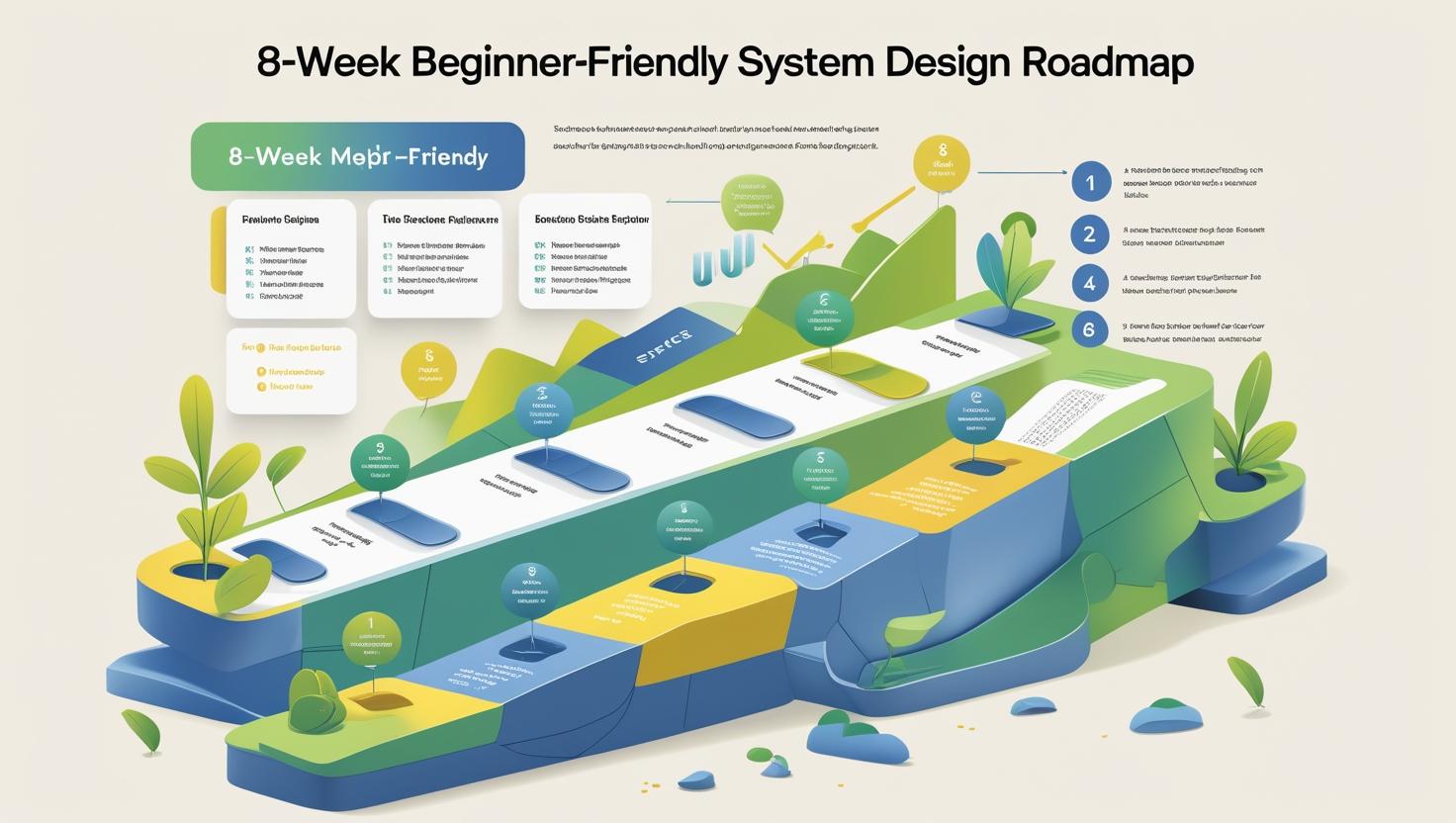
Part of series: System Design Roadmap
Week 1 Day 1: What is System Design? - The Big Picture
Welcome to Week 1 of your System Design journey! 🚀
What is System Design?
System Design is the process of defining the architecture, components, modules, interfaces, and data for a system to satisfy specified requirements.
It’s not just about “making it work”. It’s about making it work at scale, reliably, and efficiently.
The Three Pillars
When designing large systems, we care about three main things:
1. Scalability
Can the system handle growth?
- If users grow from 100 to 100 million, will the site crash?
- Vertical Scaling: Buying a bigger server (more RAM, CPU).
- Horizontal Scaling: Adding more servers (cluster).
2. Reliability
Does the system work correctly, even when things go wrong?
- Hardware fails, networks timeout, bugs happen.
- A reliable system is fault-tolerant. It continues to function (perhaps with reduced features) rather than collapsing entirely.
3. Maintainability
Is it easy for engineers to work on?
- Clean code, good documentation, automated testing.
- If it takes 2 weeks to add a simple button, the system is not maintainable.
Real World Example: Designing a URL Shortener (Like Bit.ly)
Imagine you need to store 1 billion URLs.
- Storage: How much disk space? (1 billion * 100 bytes = 100GB). Easy.
- Traffic: If 1 million users click links every second, a single server will melt. You need a Load Balancer.
- Latency: Users want instant redirects. You need a Cache (Redis).
For the next 8 weeks, we will learn every single component needed to build this.
Homework
Take a look at a website you use daily (e.g., Twitter). Try to guess:
- Where do they store tweets? (Database)
- Where do they store images? (Object Storage like S3)
- How do they show you a feed? (Algorithms + Cache)
See you on Day 2, where we explore the Client-Server Model! 💻